Four Bars of Nothing: Confessions of a Creative Who Paid Extra to Be Unreachable
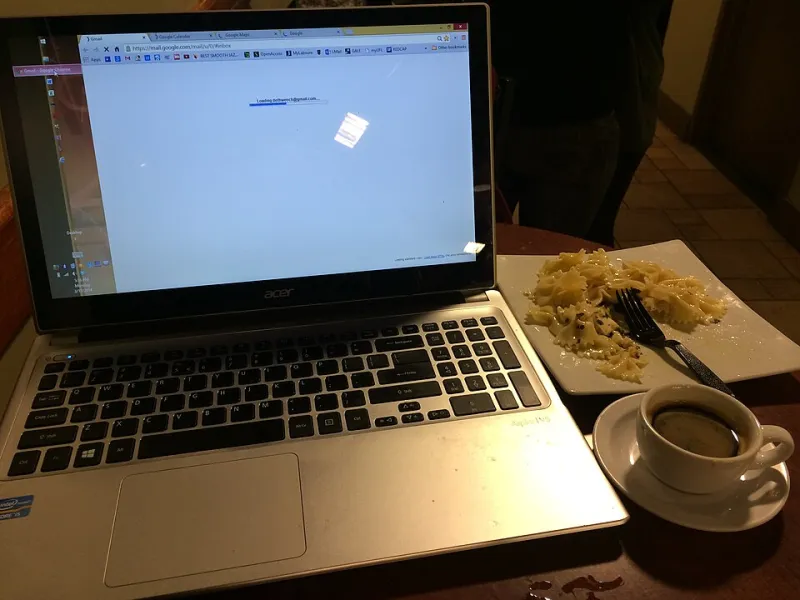
Photo: Monika Wahi, CC BY-SA 3.0, via Wikimedia Commons
There's a café on a back street in Leeds where the wifi is, technically, available. It's one of those passwords-on-a-chalkboard jobs, the sort of place that means well. It also doesn't work. Hasn't worked properly since about 2019. The signal dribbles in at roughly the speed of a nervous hedgehog, and after twenty minutes of trying to load an email, you give up and do something radical instead: you work.
I've written more in that café than anywhere else I've ever set up a laptop. Which is a problem, because it means I now have to admit something uncomfortable. The single best productivity tool I've used in fifteen years of freelancing isn't an app, a subscription, or a £400 ergonomic chair. It's a dead router.
The Luxurious Art of Being Unreachable
Disconnection has become a luxury good, hasn't it? Once upon a time, being offline meant being poor, or rural, or both. Now it means you're the sort of person who has boundaries. There are co-working spaces in London charging £400 a month for the privilege of a 'no-wifi floor' — a room with fewer plugs than a Travelodge and the ambient hum of everyone silently congratulating themselves. We've monetised the absence of a thing we spent twenty years installing in every pub, train and dentist's waiting room.
And fair play to the market, honestly. It spotted a gap. Because for creative work — the actual thinking part, the sketching, the writing, the staring-out-of-the-window part — connectivity is mostly a liability wearing a lanyard. Every open tab is a colleague. Every notification is a tiny man in your pocket asking for one quick thing. The internet didn't make me more productive; it made me available, which is a different product entirely, and one I never agreed to sell.
The 4pm Panic, Remembered Fondly
Here's the thing nobody says out loud: some of my best deadlines have been survived because the broadband died. A storm in February took out my street for a day and a half, and instead of the usual 4pm panic-refresh of my inbox, I opened the actual project file and finished it. Exported it. Uploaded it the next morning from a friend's kitchen while their cat judged me. Nobody noticed the difference. The client was delighted. The invoice was paid on time, which is more than I can say for most weeks when I was online and 'optimising my workflow'.
There's a specific kind of clarity that arrives when the option of distraction is removed rather than resisted. Willpower is a muscle; a dead connection is a wall. I'd rather lean on the wall.
Aeroplane Mode: The Last Honest Hack
Every productivity system eventually rots into a subscription. The Pomodoro technique has an app now, which rather defeats the point. But aeroplane mode — the little aeroplane icon, sitting there in your control centre like a saint — remains free, instant, and impossible to upsell. Nobody has figured out how to charge for it. Long may that last.
I did an entire edit on a flight to Edinburgh once. Ninety minutes, no signal, battery dying, and it was the most focused I'd been since university. The second the wheels touched down and my phone reconnected with a chorus of pings, I felt the fog roll back in like a Yorkshire mist with a grudge.
The Practical Bit, Because You'll Ask
I'm not suggesting you become a hermit with a film camera and opinions about sourdough. But a few things have stuck:
- The router has a switch. Mine lives on a plug socket I can reach with my foot. It's amazing how 'just checking one thing' becomes impossible when checking involves bending down.
- Download before you disconnect. Reference images, assets, the client's brief — everything you need, grabbed in advance. Offline work rewards preparation in a way online work never bothers to.
- Tell people once, not constantly. One line in your email signature about response times does more for your sanity than a status update announcing your 'digital detox' to a room full of people who don't care.
The kicker, of course, is that I'm writing this to be published on the internet, read by people on the internet, on a website that would not exist without the very thing I'm praising the absence of. I'm aware. Broken Pixel has never claimed to be consistent — the name's right there in the masthead.
But if you take one thing from this: the next time the broadband drops out and your heart sinks, have a look at what you get done before it comes back. Then ask yourself what you're actually paying that monthly fee for.