Sleep Is for People Without a GPU: The Bedroom Render Farms of Britain
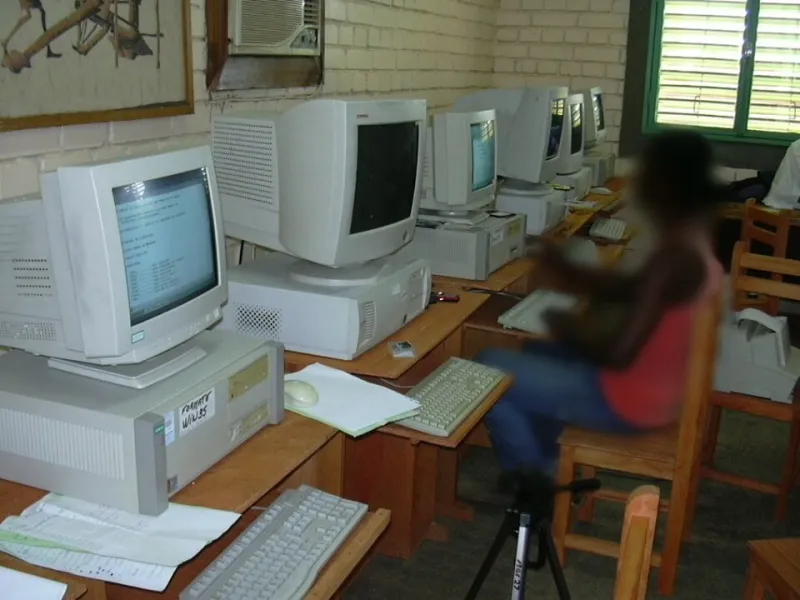
Photo: Syced, CC0, via Wikimedia Commons
There's a room in a terraced house in Salford where the temperature never drops below 29 degrees. Not in summer. Ever. The radiator hasn't been switched on since 2021. The tenant, a freelance motion designer in his early thirties, hasn't slept properly since March. The culprit is a rack of second-hand GPUs bolted to an IKEA shelving unit, chewing through render jobs while he lies two metres away, staring at the ceiling, listening to what he describes as 'a very determined bee living in the wall.'
Welcome to Britain's bedroom render economy — a quiet, whirring, faintly worrying corner of the freelance world where idle graphics cards are put to work overnight, either grinding out a client's frames or being rented out by the hour to strangers on distributed rendering platforms.
The Hum
Ask around and the stories stack up fast. A 3D artist in Leeds who renders architectural walk-throughs between midnight and seven because 'the electricity's cheap-ish and the house is asleep.' A VFX generalist in Glasgow whose partner has banned render rigs from the bedroom after what she calls 'the summer of the fans.' A Bristol-based generalist who rents out GPU time through a distributed platform and earns — brace yourself — about £34 a month.
That last figure is worth sitting with, because the pitch from these platforms is always seductive. Sign up, install the client, let your graphics card earn while you sleep. Passive income for the creative class. The reality, as ever, is more maths.
Doing the Sums
Take a mid-range card pulling roughly 300 watts under load. Run it flat out for ten hours a night and you're burning through about 3kWh. At the current UK price cap, that's somewhere north of 70p a night, before you factor in the cost of the card, the depreciation, the fan noise and the fact that you're essentially operating a small space heater in a room you also have to live in.
Rental rates on the distributed platforms vary wildly, but £0.05 to £0.15 per GPU-hour is typical for consumer-grade hardware. Our Bristol friend's £34 a month against maybe £20 in electricity is not, to use the technical term, a business. It's a rounding error with a heat problem.
The economics only start to make sense when the render jobs are yours — when an overnight farm means a client deadline gets met without a 3AM panic, or when a £4,000 rig pays for itself in saved studio rental and turnaround time. 'I don't render to make money,' the Salford designer admits. 'I render so I don't have to say no to work. The renting-it-out thing is a fiver and a warm hallway.'
The Heat and the Noise
The physical reality is the part nobody puts in the marketing. Consumer GPUs are loud. Not server-rack loud, but loud enough that several interviewees described sleeping elsewhere during big jobs. One Glasgow artist runs her rig in a cupboard with soundproofing foam from a music shop — 'it looks like a very expensive bin' — and still gets complaints from the neighbours about the low hum through the party wall.
Then there's the fire-adjacent anxiety. Cheap extension leads, daisy-chained under desks, carrying sustained loads for eight hours a night, is not what the Electrical Safety First people would call best practice. One interviewee has installed a smart plug that kills the rig if the room temperature crosses 35 degrees. Another has, in his words, 'a smoke alarm and a vibe.'
The Real Payoff
So why do it? Talk to these people long enough and the answer stops being money and starts being control. Owning your render capacity means owning your deadlines. No cloud credits, no queue on the farm, no £60 emergency top-up because the studio's nodes were busy. For freelancers on tight margins, that autonomy is worth more than the marginal income.
There's also, unmistakably, a bit of the tinkerer's romance to it. The Sacred Scrapheap crowd will recognise the type: the person who'd rather bolt together three used 3090s than rent a farm, because the rig is theirs, the noise is theirs, and the electricity bill is — regrettably, painfully — also theirs.
The bedroom render farm won't make you rich. It might make you warm, slightly deaf and very popular with the cat in winter. But as a statement of freelance independence, it's hard to beat: the work gets done, the deadline gets met, and the only landlord taking a cut is British Gas.