The Overnight Drive: When Handing Over a Job Means Filling Up the Petrol Tank
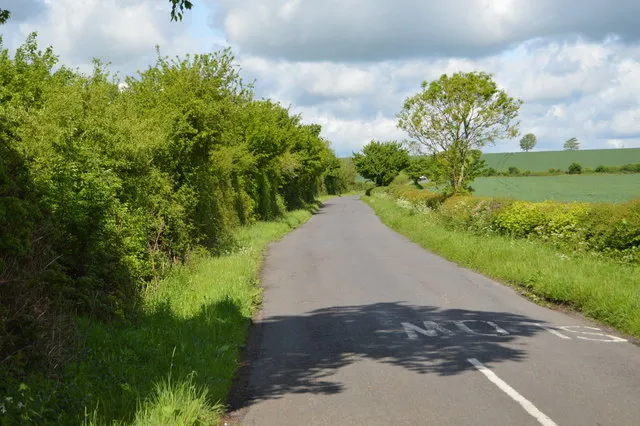
Photo: N Chadwick , CC BY-SA 2.0, via Wikimedia Commons
There's a particular kind of silence that falls in a café in rural Powys when a photographer checks their upload speed. Not disappointment, exactly. More like resignation. The number on the screen — 0.4 Mbps up, on a good day, when the wind's in the right direction — has stopped being shocking. It's just arithmetic now. And the arithmetic says: you're driving to Cardiff tonight, or the client doesn't get their selects until Thursday.
The Handover Nobody Budgets For
Ask any photographer working outside a major city what the worst part of the job is, and they won't say the early call times or the invoicing. They'll say the delivery. A single commercial shoot — a hotel, a housing development, a restaurant group — routinely generates 20 to 60 gigabytes of raw files. In central Manchester, that's an evening upload and a early morning email. In parts of Cumbria, mid Wales, the Scottish Borders or the Norfolk coast, it's a different proposition entirely: a two-hour drive to a mate's flat with gigabit fibre, a borrowed desk, and a thermos.
"I've done the Pembroke-to-Swansea run three times in a month just to hand files over," one wedding and interiors photographer told me. "Ninety quid in diesel, six hours of my life, and the client thinks I'm just being thorough." She laughed. The laugh did not reach her eyes.
This is the bit the industry doesn't put on invoices. The upload is invisible labour. It doesn't show up in day rates, and it certainly doesn't show up in the client's perception of your professionalism. What does show up is turnaround time — and turnaround time is how freelancers get judged.
Speed Is a Reputation
Here's the uncomfortable mechanism: agencies and commercial clients increasingly work on quick turnarounds. Same-day selects. Next-morning edits. A photographer who can get a gallery to a retoucher within twelve hours looks hungrier than one who can't — regardless of whose pictures are actually better.
The result is a quiet sorting process. Not by portfolio, but by postcode. The freelancer in Shoreditch with fibre to the premises can say yes to the rush job. The one in Dumfriesshire, equally talented, has to say "I can have that with you Wednesday" — and Wednesday, in agencyland, is a dirty word.
"Nobody's ever told me I lost a job over it," says a portrait photographer based on the Yorkshire coast. "They just stop asking. You notice the emails dry up from the bigger studios and you know exactly why, even though nobody says it."
That's the class divide in action: not a door slammed, but a door quietly not opened.
The Workarounds Are a Second Job
The coping strategies have become their own cottage industry. Creatives time bulk uploads for 2am, when the village exchange isn't congested by half the street streaming telly. They shoot tethered and cull on-site, delivering JPEG proofs from a phone hotspot while the raws crawl up overnight. Some have arranged informal arrangements with local schools or libraries after hours. One documentary photographer I spoke to keeps a PAYG 5G router and drives to a layby near a mast outside Beverley, which he calls "the office."
Every one of these is unpaid admin. Time spent logistically outmanoeuvring your own internet connection is time a city-based competitor spends actually editing. Multiply that across a year and the slow-lane freelancer isn't just slower — they're effectively working a second, invisible shift.
What Studios Actually Owe
So what's the ask? It's not charity, and it's not pity. It's a bit of imagination in the briefing process.
Studios and clients could start by building handover windows into contracts that don't assume gigabit. Spec a 48-hour delivery window instead of same-day, and price it the same. Offer a courier or hard drive budget for big file transfers — a £15 encrypted SSD posted next-day is cheaper than a tank of diesel and infinitely less demoralising. And crucially, stop treating turnaround speed as a proxy for competence. Ask to see the work. Ask about the process. You might find the photographer with the worst connection in the room has the best eye in it.
Some are already doing this. A handful of London production hubs now offer "remote desk" days where freelancers can come in, plug in and push files on studio infrastructure — treating bandwidth like they'd treat a studio kitchen or a loan lens. It's a small thing. It's also the difference between a regional talent staying in the game or packing it in.
Because that's the endgame here, and it should worry everyone. If connectivity decides who can play, the industry slowly becomes a London-and-Manchester-only concern, staffed by people who could afford to live near the fibre. The regions don't stop producing talent. The talent just stops being able to afford to deliver it.
The pictures are already good enough. It's the pipes that need sorting — and until they are, the least the rest of the industry can do is stop pretending the upload is free.